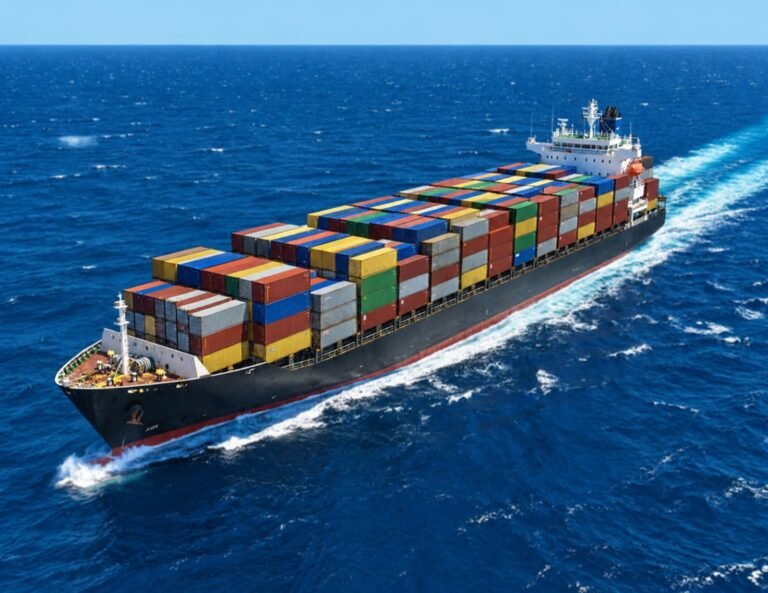
An international shipment may be loaded, unloaded, stacked and scanned many times before it reaches its destination. Strong, well-planned packaging is your first line of protection, and it can also lower your shipping cost.
Choose the right box
Use a new, rigid, double-walled cardboard box for most goods. Old boxes lose their strength and may carry previous labels that confuse handlers. For heavy or fragile items, consider a wooden crate or a palletised shipment.
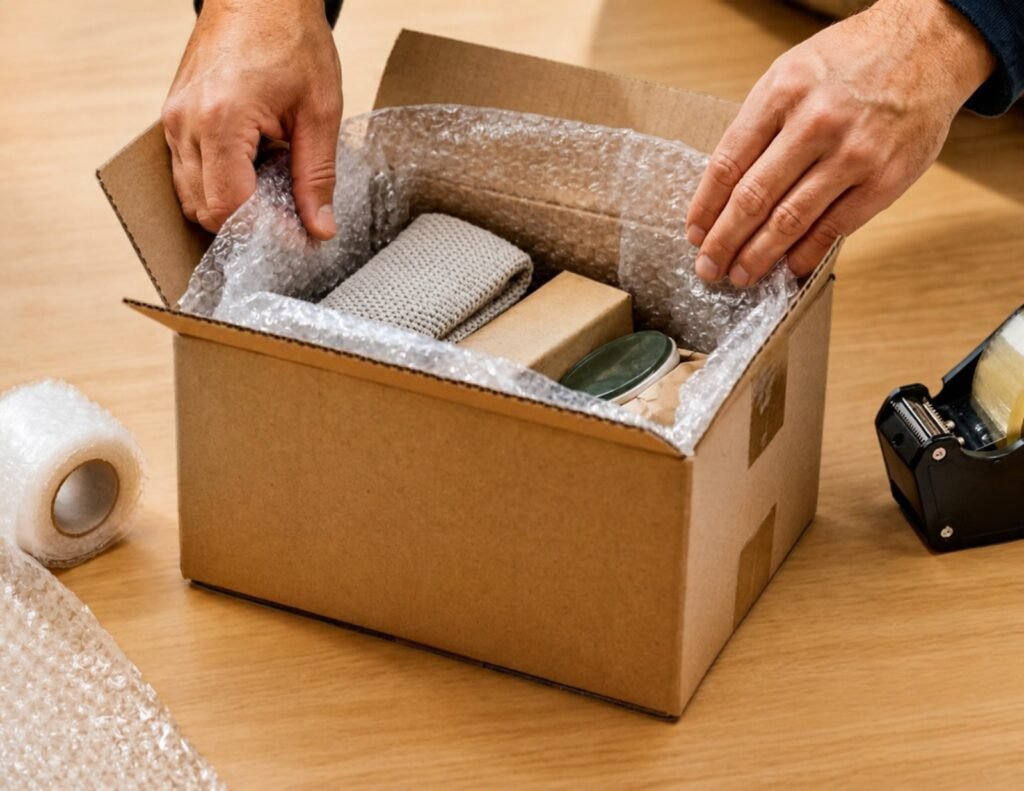
Cushion every item
- Wrap each item separately with bubble wrap or foam.
- Leave at least 5 cm of cushioning between the items and the walls of the box.
- Fill empty spaces so nothing moves when the box is shaken.
- Place heavier items at the bottom and lighter items on top.
Seal it properly
Use strong packing tape, at least 5 cm wide, and apply it in an H pattern across the top and bottom seams. Avoid string, paper tape or wrapping the box in paper, as these can tear or catch in conveyor systems.
Protect against moisture
Sea freight in particular can expose goods to humidity. Place moisture-sensitive items in sealed plastic bags and consider adding moisture absorbers inside the box.
Label clearly
- Attach the shipping label on the largest flat surface of the box.
- Remove or cover any old labels and barcodes.
- Place a copy of the delivery address inside the box as a backup.
- Mark fragile goods clearly, but remember that packaging, not labels, is what protects them.
Pack smart to save money
Shipping charges are based on the greater of actual weight and volumetric weight, which reflects how much space a package takes up. Using a box that fits your goods closely avoids paying to ship empty space.
Need packing support?
If you are shipping fragile, high-value or unusually shaped goods, ask our team about professional packing and crating before your pickup date.